

Lower-priced streaming plans can help households reduce monthly entertainment expenses, but they often come with limitations that affect the viewing experience. Before choosing a cheaper subscription, it is important to understand what features, content, and services may be restricted.
From advertising interruptions to limited downloads and unavailable titles, lower price on demand streaming services restrictions can vary significantly between platforms. This guide explains the most common limitations, compares what viewers should expect, and explores practical ways to save money while keeping access to the entertainment they enjoy.
Why do Streaming Services Offer Lower-Priced Plans?
Streaming platforms have introduced more affordable subscription options to attract viewers who do not want to pay for premium, ad-free packages. These plans typically reduce the monthly cost by offering a different combination of features and viewing conditions.
One common approach is an ad-supported subscription. Instead of paying for an entirely ad-free experience, viewers accept commercial breaks in exchange for a lower monthly fee. Other platforms may limit certain features, such as offline downloads, simultaneous streams, or video quality. These differences allow providers to offer several pricing tiers for customers with different budgets and viewing habits.
However, a cheaper subscription does not always provide the best value. Viewers should compare the restrictions with their actual entertainment needs before making a decision.
Common Restrictions on Lower-Priced On-Demand Streaming Services
Not every affordable streaming plan has the same limitations. Some restrictions affect convenience, while others directly determine which movies and TV shows viewers can access.
Advertisements During Movies and TV Shows
Advertising is one of the most noticeable differences between lower-priced and premium streaming plans.
Instead of watching content without interruptions, subscribers may see advertisements before or during movies and TV episodes. The number and length of these commercial breaks depend on the platform and subscription plan.
For viewers who watch occasionally, advertisements may be a reasonable trade-off. However, people who regularly watch long movies or multiple episodes may find frequent interruptions frustrating. Netflix, for example, explains that its ad-supported experience includes commercial breaks during most movies and TV shows. Some titles may also be unavailable because of licensing restrictions. You can review the details in the official Netflix guide to ads and supported plans.
Limited Content Availability
A lower-priced plan does not always provide access to the entire content library.
Licensing agreements can prevent streaming platforms from offering certain titles through their ad-supported subscriptions. As a result, viewers may find that some movies or TV shows are locked even though they are available on a more expensive plan.
This can become frustrating when you subscribe mainly to watch a particular series or movie.
Before choosing a cheaper tier, check whether your favorite titles are included. A low monthly price may not be worthwhile if the content you actually want to watch is unavailable.
Restrictions on Offline Downloads
Offline downloads are useful for people who travel frequently, have limited internet access, or prefer watching entertainment without using mobile data.
However, some lower-priced subscriptions limit the number of downloads or remove offline viewing altogether. Other plans may restrict downloads to certain devices or impose monthly limits.
If you mainly watch at home with a reliable internet connection, this restriction may not matter much. But if you regularly watch movies while traveling, an ad-free plan with more flexible download options may offer better value.
Limited Simultaneous Streams
Another common restriction involves the number of devices that can stream content at the same time.
For example, a lower-tier subscription may allow fewer simultaneous streams than a premium plan. This can become a problem for families or households where different people want to watch separate programs.
Before selecting a plan, consider how many people regularly use the account. A cheaper subscription may save money initially but create inconvenience if several household members need access at once.
Video Quality and Device Compatibility
Some affordable plans may limit video resolution or restrict access on certain devices. Depending on the provider, subscribers may not receive the same 4K, HDR, or other premium viewing features available with more expensive packages.
Device compatibility also matters. An older smart TV or streaming device may not support every subscription tier.
Check the platform’s supported devices and video specifications before subscribing, especially if you have a 4K television and want to make the most of its display quality.
Lower-Priced vs Premium Streaming Plans
The differences between subscription tiers become easier to understand when you compare their typical features.
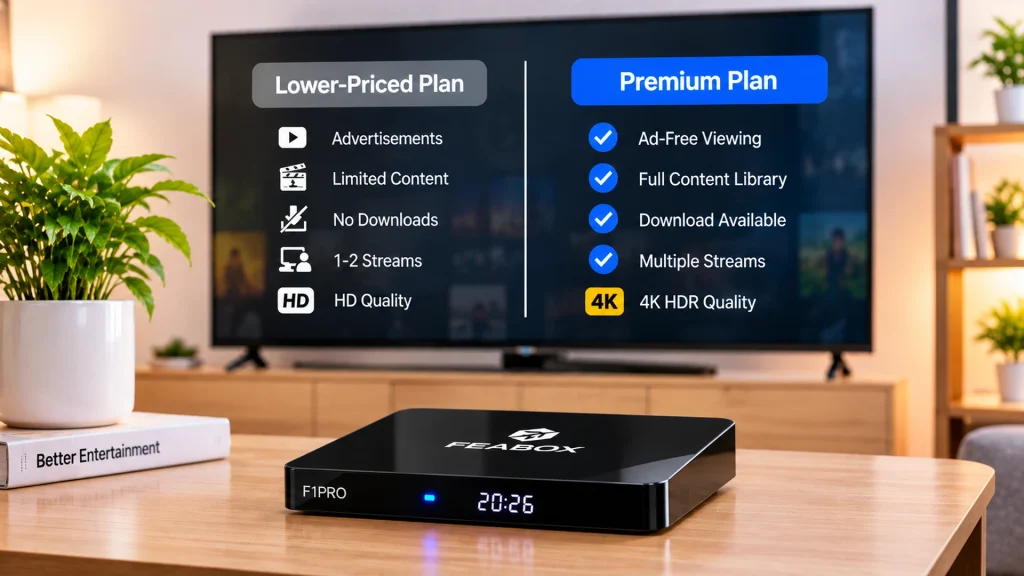
| Feature | Lower-Priced Plans | Premium Plans |
|---|---|---|
| Monthly cost | Generally cheaper | Generally more expensive |
| Advertisements | May include commercial breaks | Often ad-free |
| Content library | May exclude selected titles | Usually broader access |
| Offline downloads | May be limited or unavailable | Often includes more flexibility |
| Simultaneous streams | May allow fewer devices | Usually supports more devices |
| Video quality | May have resolution limits | May include 4K or HDR |
| Device compatibility | May have additional restrictions | Depends on provider and plan |
These are general differences rather than universal rules. Each streaming platform sets its own subscription features, and plan availability can vary by country.
The key is to compare the actual benefits rather than assuming that every premium plan includes the same features.
Are Cheaper Streaming Plans Actually Worth It?
A lower-priced subscription can be a good choice when its restrictions do not affect your viewing habits.
For example, someone who watches a few movies each month may not mind advertisements or limited downloads. Paying less for a plan with fewer features can make sense if the available content meets their needs.
However, the same plan may not work well for a household that watches television every day, shares an account across several devices, or wants access to specific exclusive titles.
Consider these situations before choosing:
- Occasional viewers: Lower-priced plans may provide enough entertainment without unnecessary premium features.
- Families: Simultaneous stream limits and account restrictions may create inconvenience.
- Movie enthusiasts: Content exclusions, advertisements, and video quality limitations may affect the overall experience.
- Frequent travelers: Offline download restrictions can make cheaper plans less practical.
- Sports fans: On-demand subscriptions may not include the live sports coverage they want.
It is also worth considering the total cost of multiple subscriptions. Paying for several discounted plans can still become expensive over time.
For a broader comparison of subscription expenses and alternative entertainment options, read our guide to rising streaming costs and alternatives.
How to Save Money Without Accepting Too Many Restrictions
You do not have to choose the cheapest available plan to reduce your entertainment expenses. A more practical approach is to identify which features you actually use and avoid paying for extras that provide little value.
Compare Subscription Prices and Features
Start by reviewing the available plans from your current streaming providers. Look beyond the advertised monthly price and compare advertisements, content access, download options, video quality, and device limits.
A slightly more expensive plan may provide significantly better value if it includes the features you use every day.
Our guide to streaming services prices can help you compare subscription costs and understand how different plans affect your entertainment budget.
Rotate Your Streaming Subscriptions
You do not necessarily need to maintain every subscription throughout the year.
Instead, consider subscribing to one platform when it releases a show you want to watch, then canceling or pausing it when you finish. You can move to another service when its content becomes more relevant to your interests.
This approach reduces recurring expenses without requiring you to give up access to paid entertainment entirely.
Combine Free and Paid Streaming Services
Free ad-supported platforms can complement your existing subscriptions. They may provide movies, TV shows, live channels, and other entertainment without adding another monthly payment.
The content selection may not match premium services, but free platforms can cover casual viewing and help reduce the number of paid subscriptions you need.
A combination of free services and one or two carefully selected paid plans may be more practical than paying for several premium subscriptions.
Consider a Flexible Android TV Box
Another option is to use an Android TV box to access compatible entertainment applications through one device.
An Android TV box does not remove restrictions imposed by individual streaming providers. However, it can make it easier to organize supported applications and switch between different entertainment services on your television.
This can be useful for households that combine free applications with a small number of paid subscriptions.
Can an Android TV Box Help Reduce Streaming Expenses?
An Android TV box provides a different way to organize home entertainment. Rather than relying entirely on a single streaming platform or a traditional cable package, users can install and access compatible applications through an Android-based device.
Some potential advantages include:
- Application flexibility: Choose compatible applications based on your entertainment preferences.
- One central device: Access supported services through the same television setup.
- Free entertainment options: Use compatible free streaming applications where available.
- More control over subscriptions: Decide which paid services are worth keeping instead of depending on one large bundle.
However, an Android TV box does not automatically unlock premium content or remove subscription restrictions. Paid applications may still require individual accounts, and content availability depends on licensing, location, and the provider’s terms. The main benefit is flexibility, not unlimited free access.
Is FeaBox a Practical Option for Home Entertainment?
For viewers looking for a dedicated Android TV device, FeaBox offers another option to consider. As one of the TV box suppliers in the US, FeaBox focuses on Android-based home entertainment devices that support compatible applications.
The FeaBox F1 Pro is designed for everyday home entertainment, giving users access to supported applications through its Android environment. This can help bring different entertainment options together on one television without depending entirely on a traditional cable package.
For households looking for a flexible home entertainment setup, the FeaBox F1 Pro specs are worth exploring. This Android TV box is designed for everyday viewing, including movies, TV shows, and other compatible streaming applications. Users can access supported apps through its Android environment and choose the services that best match their viewing preferences.
The F1 Pro is a practical option for people who want a dedicated streaming device without committing to another traditional cable package. It is a one-time hardware purchase with no mandatory monthly FeaBox service fee. However, some third-party applications may still require separate subscriptions.
Some points worth considering include:
- Android-based interface: Explore compatible applications through the available app stores.
- Flexible entertainment options: Choose supported applications based on your viewing habits.
- Convenient home setup: Access multiple compatible services through one device.
- No mandatory FeaBox monthly service fee: The device does not require a recurring FeaBox service subscription.
Keep in mind that third-party platforms such as Netflix and other paid streaming services may still require separate subscriptions. Their individual restrictions also continue to apply when accessed through an Android TV box.
You can learn more about available devices and features at FeaBox: the best TV box in the market.
Final Thoughts
Lower-priced on-demand streaming services can help reduce monthly entertainment expenses, but their restrictions deserve careful consideration. Advertisements, limited content libraries, download limits, fewer simultaneous streams, and video quality differences can all affect the viewing experience.
The best subscription is not necessarily the cheapest one. It is the plan that gives you access to the content and features you actually use without adding unnecessary expenses.
For a more flexible setup, consider combining free streaming applications, selected paid subscriptions, and an Android TV box that supports your preferred services. With a little planning, you can enjoy a wider range of entertainment while keeping your monthly budget under control.
Frequently Asked Questions
What are the most common restrictions on lower-priced streaming services?
Common restrictions include advertisements, limited content availability, fewer simultaneous streams, download limits, lower video quality, and device compatibility requirements. The exact limitations depend on the streaming provider and subscription tier.
Are lower-priced streaming plans worth buying?
They can be worthwhile if you do not mind advertisements or do not need premium features. Before subscribing, check whether your favorite content is available and whether the plan supports your preferred devices.
Do cheaper streaming plans always include advertisements?
No. Some affordable plans include advertisements, while others reduce costs through different feature limits or content restrictions. Always review the plan details before purchasing.
Can I download movies with a lower-priced streaming subscription?
It depends on the provider. Some ad-supported plans allow downloads with certain limits, while others do not include offline viewing. Check the download policy for your specific subscription.
Can an Android TV box remove streaming service restrictions?
No. An Android TV box provides access to compatible applications, but it does not remove the content, account, or subscription restrictions set by individual streaming providers.
Does FeaBox require a monthly subscription fee?
FeaBox does not require a mandatory monthly FeaBox service fee. However, third-party applications and streaming platforms may charge separate subscription fees.
How can I reduce streaming costs without losing my favorite shows?
Review your subscriptions, rotate services based on new releases, compare plan features, and use free streaming platforms when suitable. Keeping only the subscriptions you regularly use can help reduce recurring expenses.



[…] You do not necessarily need to cancel every subscription to reduce entertainment expenses. A few changes can make a meaningful difference. You can also discover more practical strategies in our guide on how to save money on streaming services […]